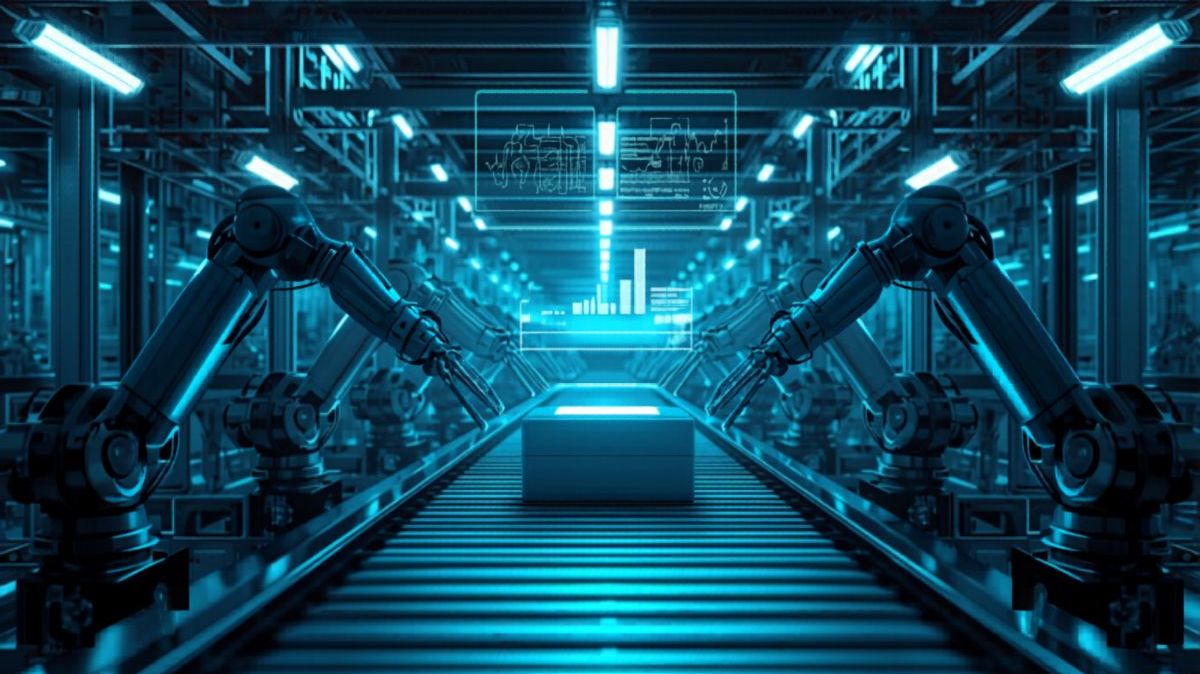
The manufacturing sector is undergoing a profound transformation driven by artificial intelligence. What once sounded like science fiction — machines that predict their own failures, production lines that optimize themselves in real time, and supply chains that adapt autonomously — is now the reality for forward-thinking manufacturers worldwide.
The numbers tell a compelling story. The global AI in manufacturing market reached over $34 billion in 2025 and is projected to surpass $155 billion by 2030. Early adopters are already reporting production output increases of 10 to 20 percent and employee productivity gains of up to 20 percent, all without adding new machines to the floor.
Predictive Maintenance: The Low-Hanging Fruit
Perhaps the most immediate and impactful application of AI in manufacturing is predictive maintenance. Instead of following rigid maintenance schedules or waiting for equipment to break down, AI systems analyze sensor data in real time to predict when a machine will need attention. This alone can reduce unplanned downtime by up to 50 percent and extend equipment life significantly.
Quality Control Reimagined
Computer vision systems powered by AI can inspect thousands of products per minute with a level of precision that far exceeds human capability. These systems learn to identify defects that would be invisible to the naked eye, reducing waste and ensuring consistent quality across every batch.
AI-Driven Production Scheduling
By 2026, over 40 percent of manufacturers with production scheduling systems are expected to upgrade them with AI capabilities. These systems can dynamically adjust production plans based on demand fluctuations, supply chain disruptions, or equipment availability — something traditional planning tools simply cannot do.
The Rise of Collaborative Robots
In 2025, 70 percent of collaborative robot orders came from non-automotive sectors, showing that cobot technology has moved well beyond its early applications. Cobots work alongside human operators, handling repetitive or dangerous tasks while humans focus on complex decision-making.
Agentic AI: The Next Frontier
Perhaps most exciting is the emergence of agentic AI in manufacturing — systems that can autonomously plan, decide, and act within defined boundaries. Unlike traditional automation that follows fixed rules, agentic AI adapts to unexpected situations, coordinates across multiple systems, and continuously optimizes without constant human oversight.
The Adoption Gap
Despite all this momentum, challenges remain. While 98 percent of manufacturers are exploring AI in some form, only 20 percent say they are fully prepared to deploy it at scale. The biggest barriers are not technological but organizational: data quality, legacy system integration, workforce skills, and change management.
Where to Start
For companies beginning their AI journey, the path forward is clear: start with a specific, high-value use case like predictive maintenance or quality inspection. Ensure your data infrastructure is solid. Invest in training your workforce. And partner with experienced developers who understand both the technology and the unique challenges of manufacturing environments.
The factories of tomorrow are being built today. The question is not whether AI will transform manufacturing, but whether your organization will be among the leaders or the followers.